
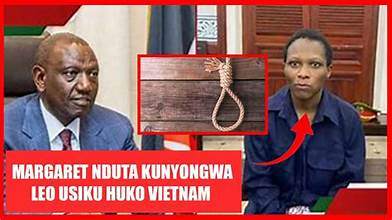

The Story that Schocked Kenya
The Gendered Face of the Death Penalty
- The “Domestic Worker” Trap: Many women, like Nduta, are recruited under the guise of legitimate labor migration. Promised jobs in the Middle East or Asia, they arrive to find their luggage has been tampered with, their documents forged, and their futures destroyed.
- Lack of Agency: These women are often at the lowest rung of the cartel hierarchy, possessing no information about the “kingpins” and having zero bargaining power during legal proceedings.
- Legal Representation: Many are prosecuted without adequate legal aid or translators, making a fair trial nearly impossible. Nduta herself was reportedly underrepresented in court during her initial trial.
The Mode of Execution: Lethal Injection
Glimmer of Hope: Vietnam’s Legal Reforms
There is a glimmer of hope in the Vietnam legal landscape. In June 2025, Vietnam’s National Assembly voted to reduce death-eligible offenses from 18 to 10.
Key Change: Effective July 1, 2025, the crime of illegal drug transport was removed from the list of capital offenses and replaced with life imprisonment.
For those already sentenced, this legislative shift provides a strong legal basis for the commutation of sentences. It signals that even strict jurisdictions are beginning to recognize that executing the “mule” does not stop the flow of drugs.
Nduta’s Sentence Commuted (July 2025)
Foreign Affairs Permanent Secretary Korir Sing’oei confirmed the
“Yes, we have received the decision from the Supreme Court in Vietnam. The next step is to initiate diplomatic efforts to help her further, but the commuting of her sentence is a positive step.”
The Broader Crisis: Kenyans in Foreign Prisons
- Approximately 1,100 Kenyans are in foreign jails globally
- Most were arrested for drug trafficking, though others face charges for sexual offenses, human trafficking, visa overstays, and other crimes
The New Threat at Home: Rutto’s Death Penalty for Drugs
“Watu wa kuuza madawa ya kulevya kama heroine, cocaine… tunabadilisha sheria, mtu kama huyo inakuwa capital punishment, anaenda kunyongwa.”(“For people selling drugs like heroin, cocaine… we are changing the law; such a person becomes a capital offence, they will be hanged.”)
No formal bill has been tabled in Parliament as of May 2026. But the rhetoric is dangerous particularly for women who, like Nduta, are often coerced into low-level drug roles.
CELSIR’s Call to Action
At the Center for Legal Support and Inmates’ Rehabilitation (CELSIR), we maintain that justice should focus on the architects of crime, not its victims.
1. Diplomatic Urgency
- Continue diplomatic pressure on Vietnam for Nduta’s clemency or repatriation
- Negotiate prisoner exchange treaties allowing citizens to serve sentences in home countries where rehabilitation and family support are possible
2. Oppose Death Penalty Expansion at Home
- Drug offences do not meet the “most serious crimes” threshold under international law (ICCPR General Comment 36)
- Women in drug prosecutions are typically couriers, not kingpins, often coerced, economically desperate, or survivors of gender-based violence
- President Ruto’s proposal directly contradicts Kenya’s 2024 UN moratorium vote and ACHPR Resolution 614 (2024)
- Public health and harm reduction are more effective than punitive measures
3. The “Blank Space” in Awareness
- Free flights
- New luggage
- Vague job descriptions
- No formal contracts
4. Rehabilitative Reform
- Prisoner exchange and repatriation
- Consular legal aid for Kenyans abroad
- Gender-sensitive sentencing recognizing coercion and vulnerability
- Family reunification for children of incarcerated parents
Dismantle the networks that prey on the vulnerable
Article by:
Anne Munyua is Founder & Executive Director of the Center for Legal Support and Inmates’ Rehabilitation (CELSIR), a Kenya-based organization providing legal aid, strategic litigation, and rehabilitative support to persons in conflict with the law.