

A Milestone Moment in Montreuil
A death sentence is often viewed as the final statement of a justice system. But behind every sentence is a person—a life story, a history, a family, a set of circumstances, and often, realities that never reached the courtroom.
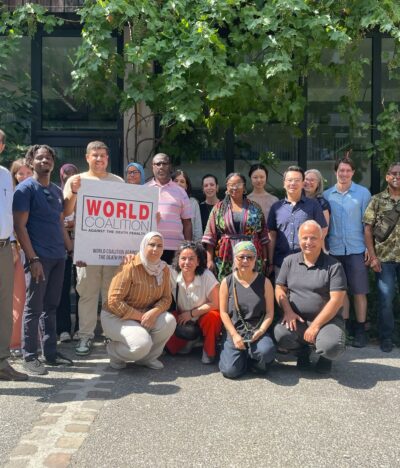
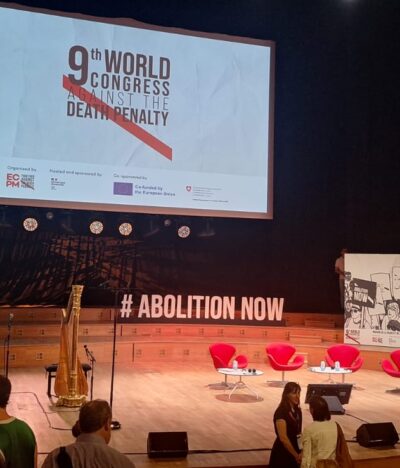
This was the central reflection I carried to Montreuil, France, where I had the privilege of joining practitioners, advocates, and researchers from across the world during the World Coalition Against the Death Penalty’s Best Practice Workshop held at MUNDO M from 3–5 July 2026.
The workshop theme, “Building on What Works: Presentations + Joint Capitalization Exercise,” created space not only to share experiences, but to ask a deeper question:
What approaches are helping us build justice systems that see people fully?
At CELSIR Kenya, our contribution focused on Gender and Inclusive Sentencing Mitigation—an area shaped by years of working alongside people facing the most severe punishments available under the law.
The Missing Stories Behind Capital Cases
Kenya presents a complex picture. While the country has maintained a de facto moratorium on executions for decades, the death penalty remains part of the legal framework. Courts continue to impose death sentences, many of which are later commuted to life imprisonment.
Yet life imprisonment, without a structured parole system, can become a form of prolonged exclusion—what some describe as a “slow death sentence.”
But beyond legal frameworks lies another challenge: invisibility.
Women rarely appear in death penalty statistics. However, the few cases that do reach capital sentencing often reveal deep structural inequalities.
At CELSIR, our experience handling capital cases involving women has shown a recurring pattern: approximately 90% of the cases we have handled involve histories connected to gender-based violence, including intimate partner violence, prolonged domestic abuse, sexual violence, coercive control, and other forms of vulnerability.
These women’s pathways into the criminal justice system are rarely simple.
They are often shaped by:
- Gender-based violence;
- Poverty and economic dependency;
- Trauma and mental health struggles;
- Abusive or coercive relationships;
- Limited education and legal awareness;
- Caregiving responsibilities.
These realities do not remove accountability. But they matter when determining what a fair and proportionate sentence should look like.
Justice Must See the Whole Person
One of the greatest lessons from our work is that an offence, standing alone, does not tell the complete story of a person.
Effective mitigation requires courts to understand the circumstances before, during, and after the offence.
At CELSIR, gender-responsive mitigation involves:
- Detailed social history investigations;
- Mental health and psychosocial assessments;
- Understanding family and community circumstances;
- Documenting rehabilitation and prison conduct;
- Developing realistic reintegration plans.
The goal is not to excuse wrongdoing. The goal is to ensure that sentencing reflects the complete human reality before the court.
Lessons From the Field
Our work with women facing capital punishment has taught us that justice systems can overlook critical issues when they fail to examine the person behind the charge.
Seeing women beyond their relationships
In the case of C, P, and J Muricho—a mother, daughter, and daughter-in-law—CELSIR’s intervention highlighted how sentencing decisions can miss important gendered and social realities.
Although initially sentenced to death and later resentenced to 30 years imprisonment, important issues remained, including recognition of time already spent in remand custody and the broader circumstances surrounding their lives.
Through extensive mitigation investigations, we documented:
- Their personal histories;
- Their caregiving roles;
- Their conduct and rehabilitation in prison;
- Their prospects for reintegration;
- Their peripheral role in the crime; and
- Their right to individualized sentencing.
The lesson from this case is clear:
Gender-responsive mitigation ensures that sentencing reflects the full human story, not only the offence.
The importance of individualized sentencing
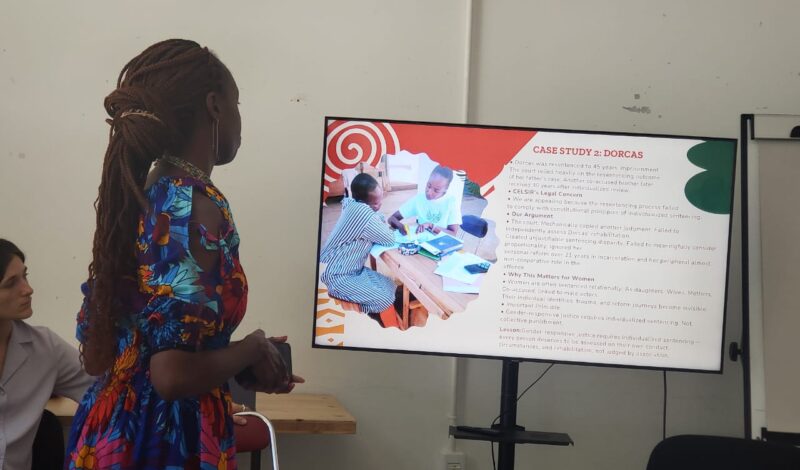
D’s case highlights another critical principle: people must be sentenced as individuals.
Her resentencing outcome was heavily influenced by the outcome of her father’s case, while another co-accused later received a different sentence following individualized review.
CELSIR’s concern is that sentencing cannot become collective punishment. A person’s sentence must reflect their own role, circumstances, rehabilitation, and potential for restoration.
Women are particularly vulnerable to being defined by their relationships—as daughters, wives, mothers, or co-accused persons.
When this happens, their own identities and journeys can disappear.
Recognizing transformation and the possibility of restoration
R’s case perhaps captures the most important question in sentencing:
Can a person become more than the worst moment of their life?
Convicted in the killing of her childhood friend, R’s case attracted harsh judgment and condemnation. However, CELSIR’s mitigation work revealed a much fuller picture, including struggles with alcoholism, profound emotional distress, suicidal thoughts, and a remarkable journey of rehabilitation.
Today, R is a prison trustee, regarded as one of the most disciplined inmates, and entrusted with institutional responsibilities.
Psychiatric expertise was engaged to support a fuller understanding of her mental health and rehabilitation.
Perhaps the most powerful moment came from the victim’s father, who told us:
“That day, I lost two daughters. One to death, and another to prison.”
His words capture the complexity of justice—acknowledging harm while also recognizing humanity, healing, and the possibility of restoration.
What We Have Learned
From CELSIR’s experience, five lessons stand out:
1. Investigate beyond the offence.
The charge is only one part of the story.
2. Document trauma and gender-based violence.
These realities are not excuses; they are essential context.
3. Evidence rehabilitation.
Transformation must be demonstrated and brought before the court.
4. Advocate for individualized sentencing.
Every person deserves to be assessed according to their own circumstances.
5. Plan for reintegration.
Justice does not end at release. Sustainable freedom requires support, opportunity, and community.
A Shared Responsibility
Gender-responsive mitigation is not about creating a different standard of justice for women.
It is about creating a better standard of justice for everyone.
A justice system that listens to people’s histories, recognizes vulnerability, acknowledges rehabilitation, and considers restoration is a justice system that is more fair, more humane, and more aligned with human dignity.
I remain grateful to the World Coalition Against the Death Penalty for creating spaces where practitioners from different parts of the world can share lessons, challenge assumptions, and build collective knowledge.
The work continues.
Together, we can build justice systems that do not only ask, “What happened?”
But also ask:
“Who is this person, how did they arrive here, and what is possible from this point forward?”
By Anne Munyua
Founder & Executive Director, Center for Legal Support and Inmates’ Rehabilitation (CELSIR)
About CELSIR: