
By Anne Munyua
Executive Director, Center for Legal Support and Inmates’ Rehabilitation (CELSIR)
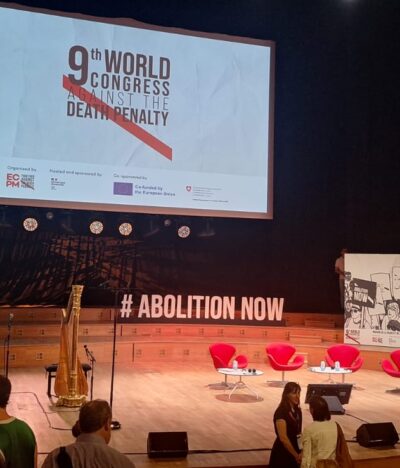
The conclusion of the 9th World Congress Against the Death Penalty did not mark the end of learning. Instead, it opened a new chapter.
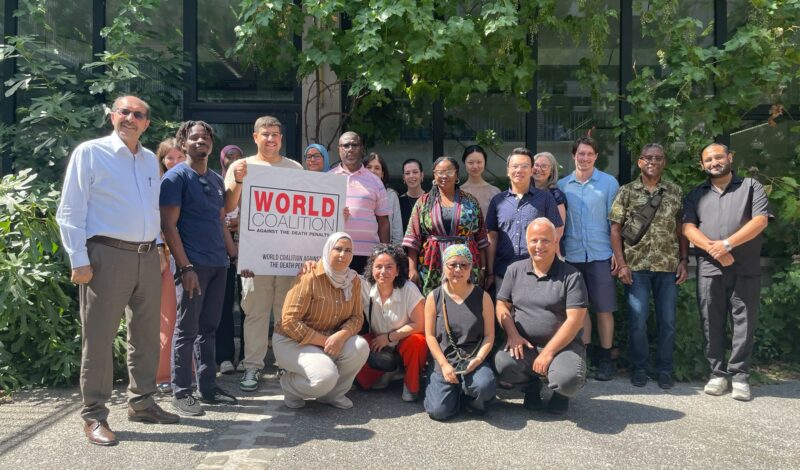
Hosted by the World Coalition Against the Death Penalty (WCADP), the Best Practice Workshop brought together member organizations for three days of reflection, peer learning and honest conversations about what it takes to sustain the global abolition movement. While the Congress challenged us to think about the future of abolition, the workshop focused on an equally important question: How do we strengthen the organizations leading this work?
Learning Through the Streets of Paris
The first day began in an unconventional yet memorable way—with a Paris Treasure Hunt.
This was no ordinary city tour. Each destination invited participants to uncover stories that have shaped the history of human rights and the abolition of the death penalty in France.
Our journey took us from Place de la République to the Mémorial de la Shoah, before leading us to Place des Vosges, where we traced the legacy of Victor Hugo. Standing outside his former residence, we reflected on the enduring influence of The Last Day of a Condemned Man, a novel that challenged public opinion on capital punishment nearly two centuries ago.
The activity reminded us that abolition has never been the work of a single generation. It has been built through the courage of writers, survivors, lawyers, activists, and communities who refused to accept that justice should come at the cost of human life.
As a bonus, our team proudly finished third in the challenge—proof that learning can be both meaningful and enjoyable.
From Inspiration to Implementation
If the morning celebrated the history of abolition, the afternoon confronted one of its present-day realities: how to finance sustainable advocacy.
During the Finance Workshop & Funding for the Abolition of the Death Penalty, participants shared the practical challenges they encounter while implementing projects under the Financial Support to Third Parties (FSTP) mechanism.
One issue resonated across organizations: exchange rate volatility.
For many organizations working with grants awarded in euros, fluctuations in local currencies can significantly affect project implementation. Questions were raised about whether contingency funds could absorb such losses. The response was clear: contingency budgets are not intended to offset exchange rate losses, and these challenges should instead be documented and communicated transparently to donors.
This discussion highlighted an important reality. Financial management is not merely an administrative responsibility; it directly affects an organization’s ability to deliver justice programmes, train lawyers, support prisoners, and engage communities.
Participants also emphasized the need for:
- simpler and more user-friendly reporting templates;
- regular training and technical support for partner organizations;
- greater flexibility where implementation realities require reasonable adjustments; and
- timely communication between funders and implementing partners.
These conversations reflected a shared commitment to balancing accountability with the realities faced by grassroots organizations.
Rethinking Partnership
One of the day’s most thought-provoking presentations came from the International Federation of Action by Christians for the Abolition of Torture (FIACAT).
Reflecting on its experience implementing FSTP grants, FIACAT acknowledged an unintended consequence of intermediary funding: some organizations had come to view FIACAT primarily as a donor rather than as a partner.
This observation sparked an important reflection.
Effective partnerships should not be defined solely by funding relationships. They should be built on mutual trust, shared expertise, honest dialogue and a common commitment to abolition.
For organizations like CELSIR, this is a valuable reminder that strengthening institutions is just as important as financing projects.
Conversations That Continue Beyond the Meeting Room
We concluded the day over a warm Palestinian-style dinner, where discussions naturally continued beyond the workshop sessions.
Around the dinner table, participants exchanged experiences, explored opportunities for collaboration, and strengthened relationships that had begun during the Congress. These informal moments often become the foundation for future partnerships, reminding us that movements are built not only through formal meetings, but also through shared experiences and genuine human connection.
Looking Ahead
Day One of the Best Practice Workshop reinforced a lesson that will stay with us long after returning to Kenya.
The abolition of the death penalty depends on strong advocacy, but advocacy alone is not enough. It also requires resilient organizations, effective partnerships, sustainable funding, and the willingness to learn from one another.
As CELSIR continues its work in legal aid, strategic litigation, rehabilitation, and advocacy, the conversations from this workshop will help shape how we strengthen our own systems and collaborate with partners across Africa and beyond.
Because building a world without the death penalty requires more than shared ideals—it requires strong organizations capable of turning those ideals into lasting change.