

Good Friday is often observed as a day of solemn reflection. For many, it is a deeply spiritual moment. But along its religious significance lies a powerful and enduring lesson about justice.
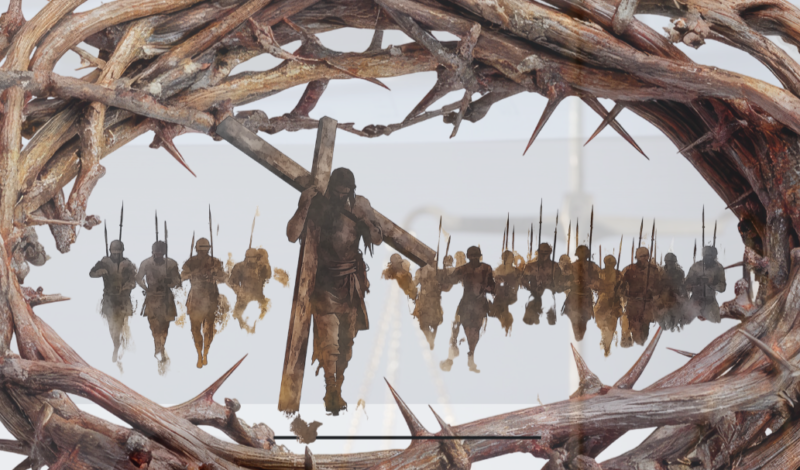
The events leading to the crucifixion of Jesus present one of history’s most striking examples of a miscarriage of justice.
Arrested under the cover of night, subjected to hurried and irregular proceedings, and ultimately condemned despite a declaration of innocence, the process raises serious questions about fairness, accountability, and the abuse of power.
From a legal perspective, several concerns emerge.
First, the issue of due process. Proceedings conducted at night, under urgency and pressure, undermine the foundational principles of fairness and transparency that are essential to any justice system.
Second, the role of bias and predetermined outcomes. Where decision-makers are influenced by external pressures, whether political, social, or institutional, the integrity of the process is compromised.
Third, the absence of adequate defense and protection of the accused. A justice system that does not fully hear or protect the accused risks condemning not only individuals, but also the credibility of the system itself.
These are not merely historical concerns. They are contemporary realities.
In many contexts today, individuals continue to face:
- Arrest without sufficient evidence
- Limited or no access to legal representation
- Prolonged pre-trial detention
- Coerced confessions or procedural violations
- Sentencing outcomes that do not fully account for context or vulnerability
For CELSIR, these are not abstract issues. They are lived experiences encountered in courtrooms, prisons, and communities.
The relevance of Good Friday, therefore, extends beyond faith. It becomes a call to action.
It reminds us that justice systems must be constantly examined, strengthened, and held accountable. It challenges us to ask difficult questions:
- Are our systems truly fair?
- Do they protect the vulnerable?
- Do they allow room for error and correction?
Importantly, Good Friday also speaks to the human cost of injustice. Behind every case file is a person. A family. A future.
This is why reform matters.
Efforts to strengthen legal aid, promote fair trial rights, address systemic bias, and ensure humane treatment within justice systems are not optional, they are essential.
As we mark this day, we are reminded that justice is not only about laws and procedures. It is about dignity.
It is about ensuring that no person is condemned without fairness, without voice, and without protection.
Because when justice fails, the consequences are irreversible.
And when justice works, it protects us all.
Authored by:
Anne Munyua – Founder & Executive Director, CELSIR AFRICA